Healthcare Professionals
We have curated some helpful resources for Healthcare Professionals about diagnosing and treating Dyspraxia/DCD; most were created outside of the US, in countries such as Canada where there is much more awareness. Dyspraxia DCD America hopes to change that. Stay tuned!!


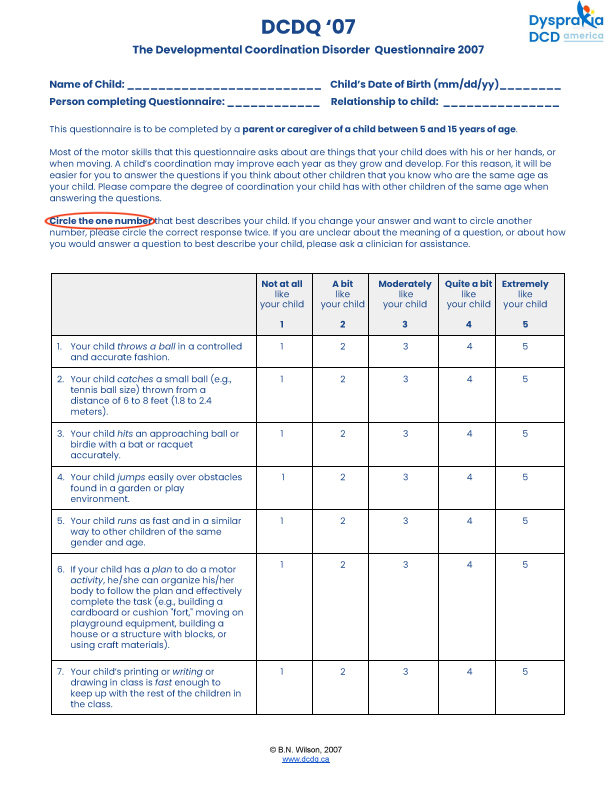
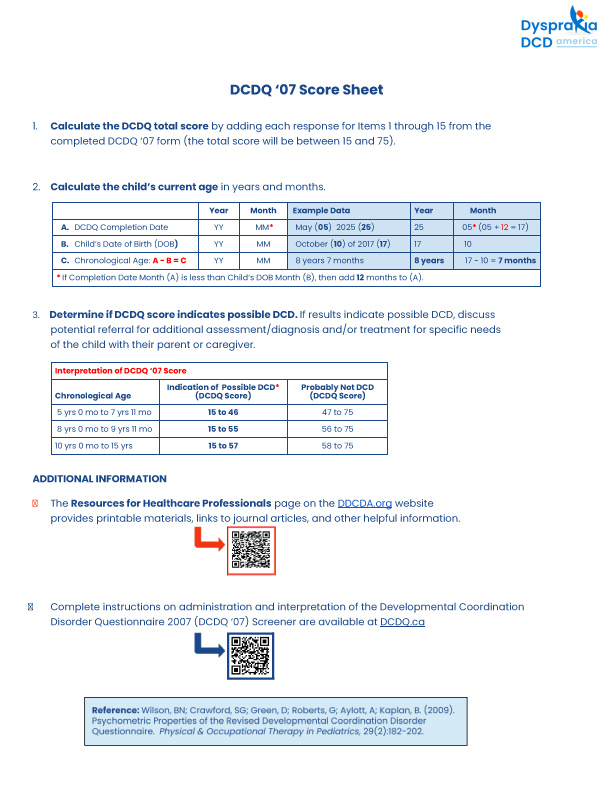

Missiuna C, Gaines R, Soucie H. Why every office needs a tennis ball: a new approach to assessing the clumsy child. Can Med Assoc J 2006;175:471–3.
Watch two videos of children tossing, catching, and bouncing tennis balls in a study from Cheryl Missiuna, Robin Gaines and Helen Soucie and published by Canadian Medical Association Journal. One child is of typical development and one child has Dyspraxia/DCD. “Motor coordination problems in otherwise healthy children of normal intelligence are common. Such children are often noted by parents, caregivers and teachers to have problems with daily tasks such as dressing themselves, to trip when they run, to spill things frequently and to have messy handwriting and drawing. They may be labelled as ‘clumsy’, ‘awkward’ and ‘lazy’” but could greatly benefit from a diagnosis and appropriate treatment for Dyspraxia/DCD.

Manchester Metropolitan University in the UK created a free video library to help children with Dyspraxia/DCD learn tasks like cutting with scissors, zipping, and tying shoelaces! Research shows that watching demonstrations that MATCH WHAT THEY SEE when performing daily tasks helps them learn these skills.

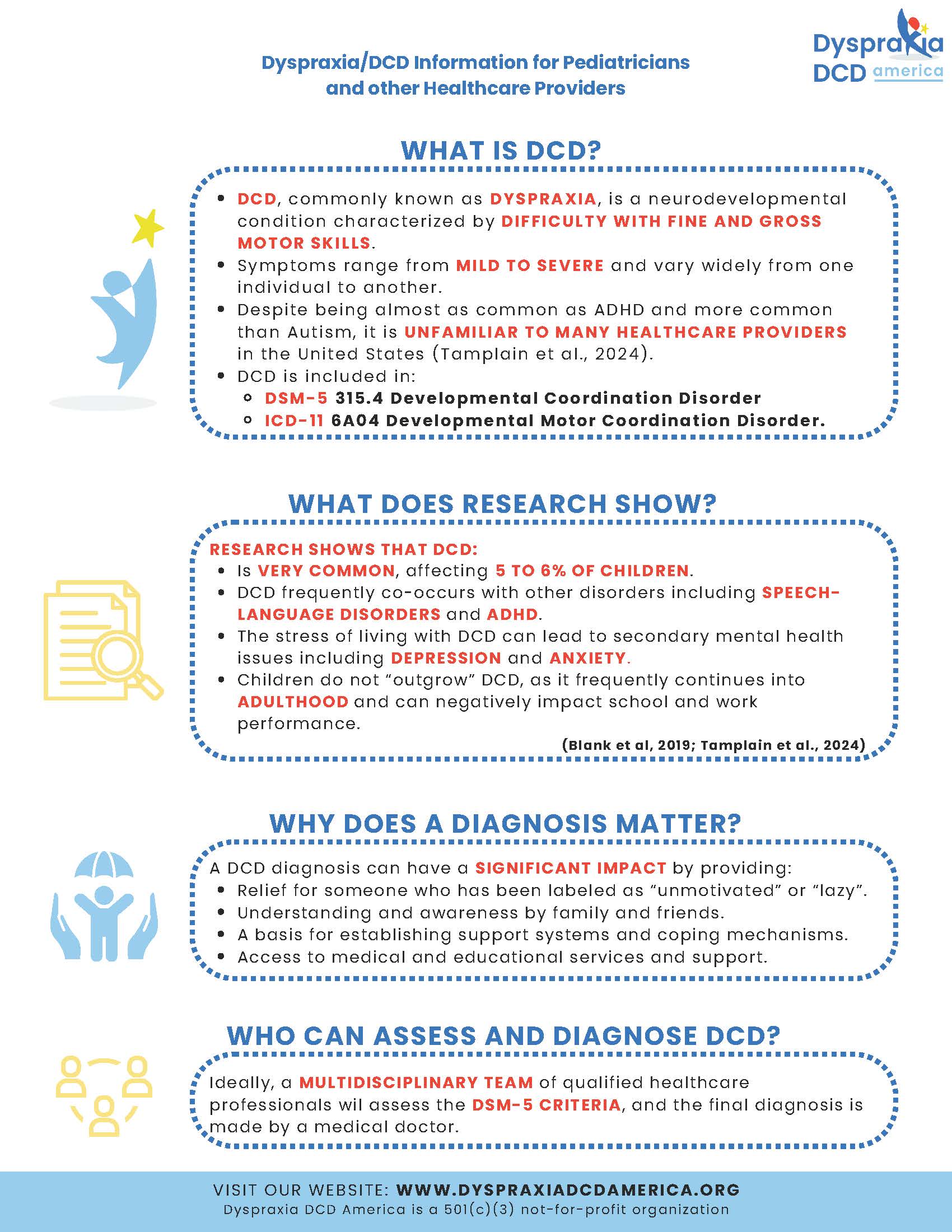
To date, there are no well-established guidelines for the assessment, diagnosis, and management of DCD or Dyspraxia in the United States. However, links to guidance documents and publications developed by international, regional, and local institutions are provided below:
Blank et al., 2019
Canadian Paediatric Society, 2021
The Children & Women’s Health Centre of British Columbia, 2018
The Children & Women’s Health Centre of British Columbia, 2018
On-demand continuing education webinars are available for Occupational and Physical Therapists through ApplyEBP, LLC (Apply Evidence-Based Practices), including the following topics:
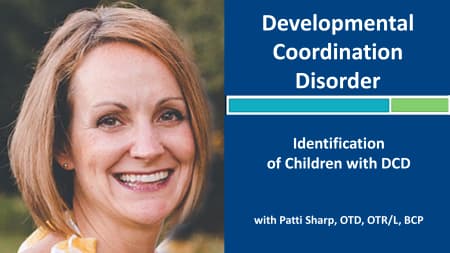
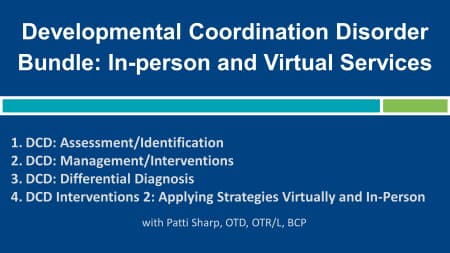
In-person and Virtual Services (4 Webinars for the Price of 3)